RAGE
A Tightly Coupled Radar-Aided Grip Estimator For Autonomous Race Cars
Real-time estimation of vehicle-tire-road interaction using FMCW Radar.
Real-time estimation of vehicle-tire-road interaction using FMCW Radar.
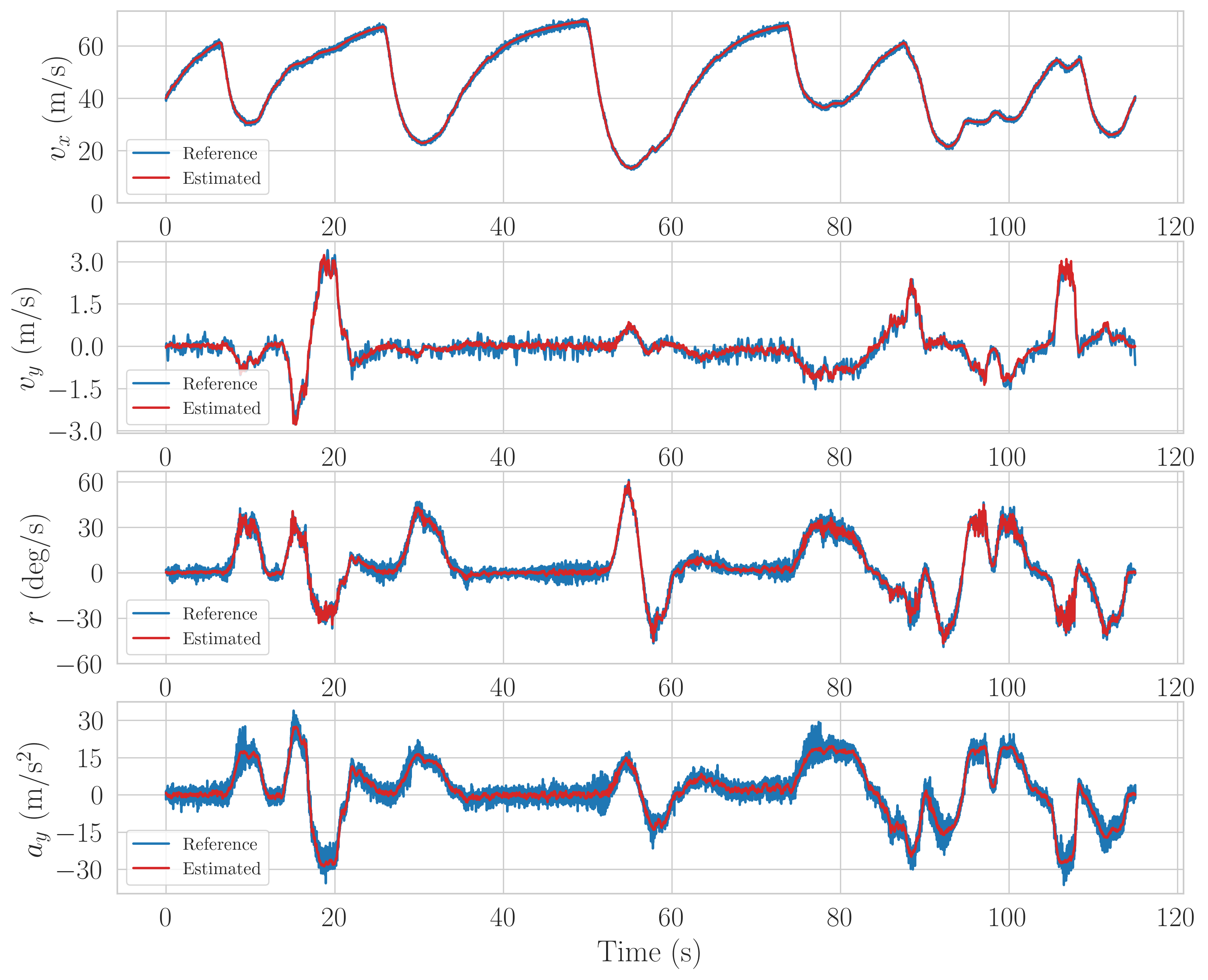
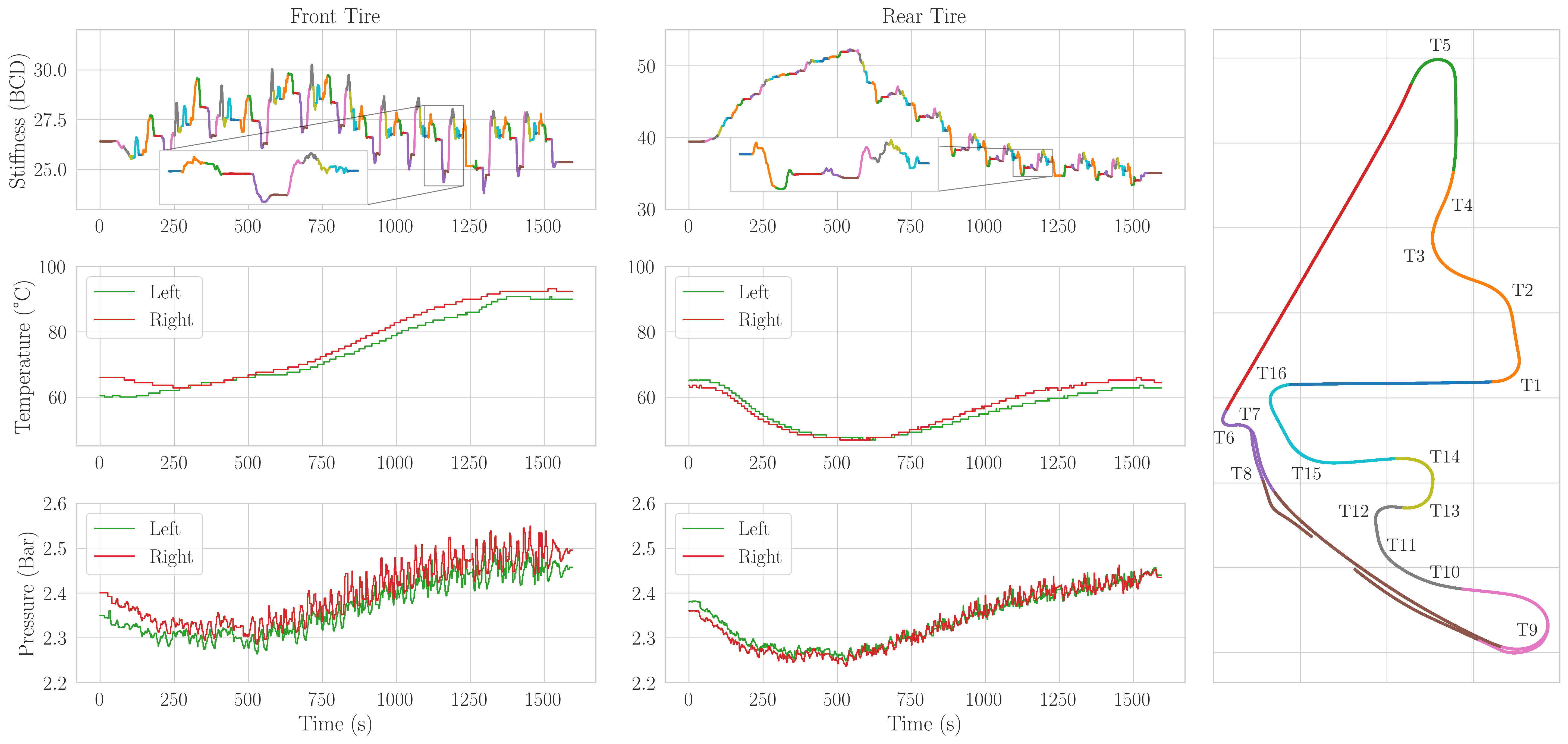
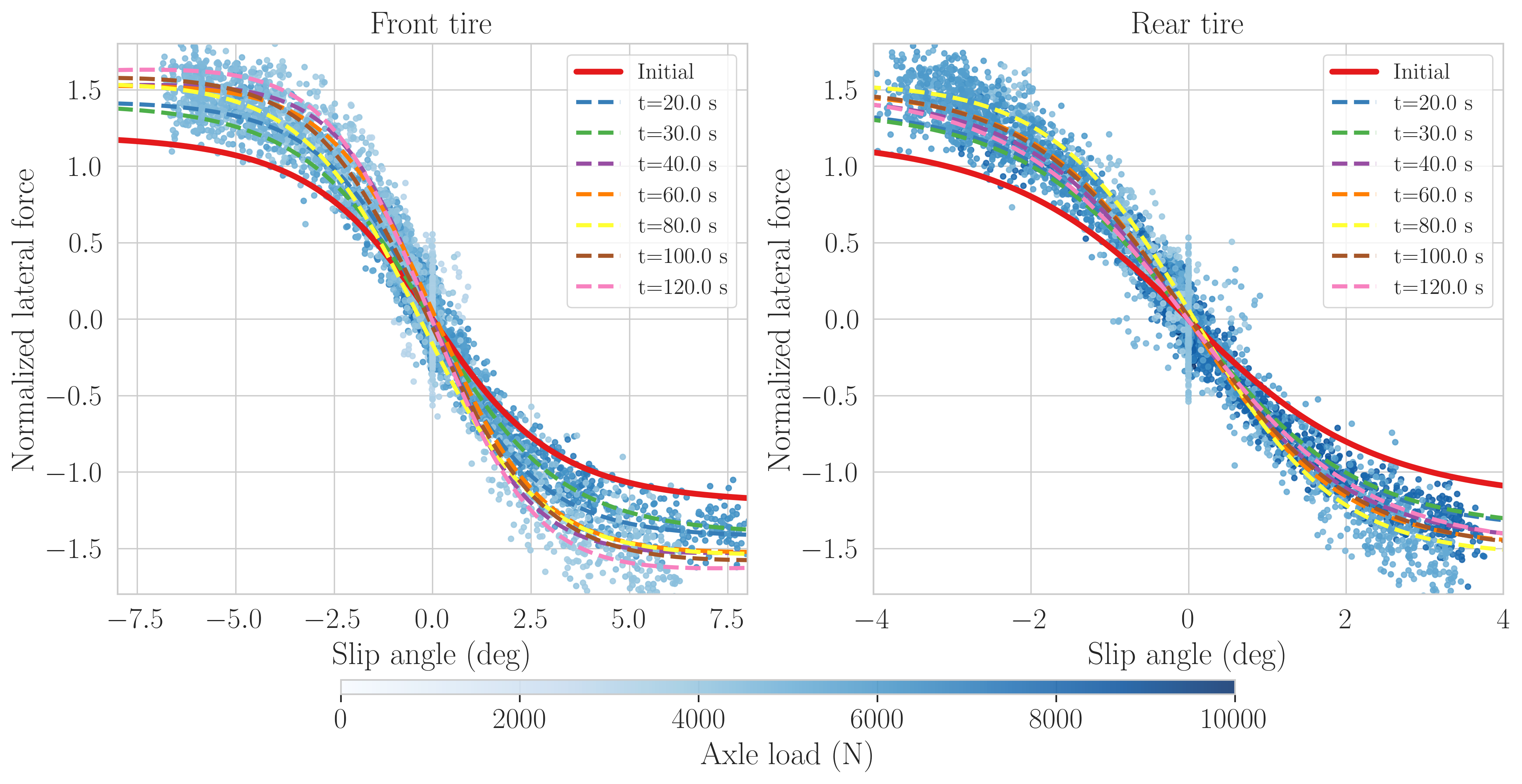
Real-time estimation of vehicle-tire-road interaction and grip level is critical for allowing autonomous race cars to safely and effectively operate at their physical limits. Traditional approaches to measure tire grip often depend on costly, specialized sensors that require custom installation, limiting scalability and deployment. In this work, we introduce a novel real-time Radar-Aided Grip Estimator (RAGE) that jointly estimates the vehicle velocity vector, tire slip angles, lateral tire forces, and tire model parameters, using only standard sensors, such as IMUs and RADARs, which are commonly available on most of modern autonomous platforms. We validate our approach through both high-fidelity simulations and real-world experiments conducted on the EAV-24 autonomous race car, demonstrating the effectiveness of our method in estimating the vehicle lateral dynamics.
Uses Radar measurements to estimate the vehicle lateral dynamics, including tire slip angles and lateral tire forces.
Online fitting of a non-linear tire model, enabling a more accurate representation of the lateral forces.
The proposed method is robust to sensor delays and to Doppler aliasing, which are critical issues in high-speed applications.